Make an appointment with Cecile Thomas by phone 07 66 40 45 88 or email cecile@harmony-me.com

chakra tui na blanc

Tui Na

What is the Tui Na?

tui na signes chinois

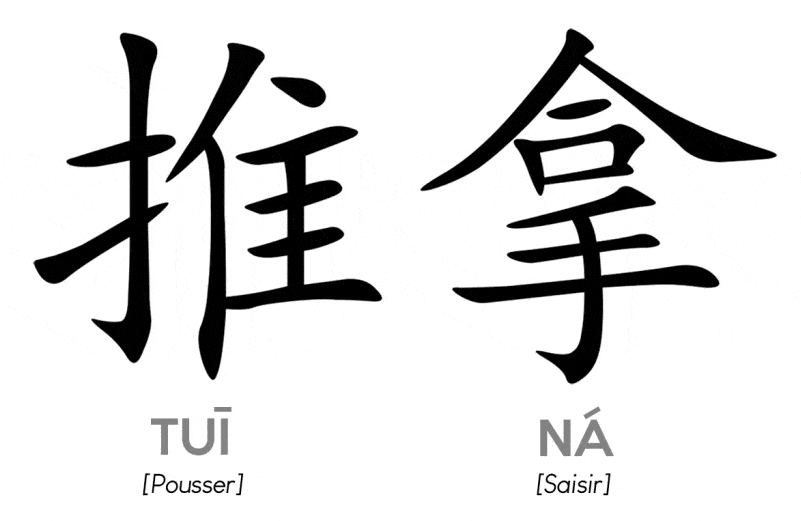
The Chinese notion Tui Na is composed of two ideograms:
- 推 Tuī «Push»
- 拿 Ná "Enter"

interpreted or translated by massage
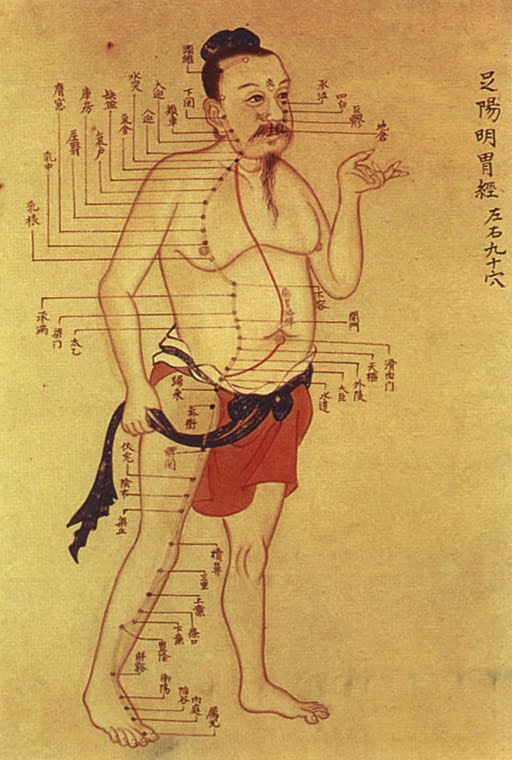
Tui Na is one of the branches of The Traditional Chinese Medicine designed to harmonise vital energy, the Qi.

medecine chinoise

a manual technique

Tui Na is one of the 5 branches of traditional Chinese medicine (TCM) with acupuncture, herbalism, nutrition, and energy exercises (Qi Gong).

It is a manual massage technique used throughout China, based on the knowledge of meridians and acupuncture points to act directly on the vital energy (Qi) by dispersing it (to calm), or toning it (to stimulate a function).

a prevention tool

The Tui Na uses friction, kneading, digito pressures, of various intensity or strength and in specific places of the body in order to rebalance and circulate the vital energy. There is a difference between the softer Tui Na of the North and the Tui Na of the South.

Tui Na is an exceptional tool for prevention and treatment or in addition to medical treatment.
It can relieve all our small ailments without medication: fever, cough, digestive problems, diarrhea.

a dynamic massage

Tui Na differs from Western massage techniques. Its energetic concept is based on the harmonization of Chi (vital energy). The practitioner chooses among techniques that combine “gestures” of pushing, rubbing, kneading, gripping-winding, and performs them with a particular force as needed.

The massages are usually performed with his upper limbs (fingers, thumb, middle finger, palm, base or slice of the hand, hand, wrist, forearm or elbow), but sometimes his knees, feet or even his skull are used. There is a specific therapeutic Tui Na for babies.

Tui Na is one of the branches of Chinese medicine designed to harmonize vital energy, Qi.

The tui na,
A therapeutic modality

Tui Na is primarily therapeutic. Prescribed following an energy balance
by a doctor of Chinese medicine, it relieves many common ailments:

icone tuina rhume

Common cold

icone tuina migraine

Headache

icone tuina nervosite

Nervousness

icone tuina digestion

Digestion problems

icone tuina articulaire

Joint pain

Tui Na also eliminates blockages and stimulates the body’s self-healing abilities.
It promotes blood and lymphatic circulation.
Tui Na can also be used simply as a relaxing massage
or for “energy harmonization”,
And this is why I include it in my practices, most often at the end of the session, to remove residual tensions in the neck, shoulders, upper and lower back, or in the limbs.

HISTORY OF THE TUI NA

Traditional Chinese medicine consists of 5 methods: 
acupuncture, herbalism, nutrition, physical exercise (Chi Kong and Tai Chi) and Tui Na.

MANUAL METHODS

Inscriptions found on turtle shells and bones show that manual methods have been used for millennia to treat children and digestive disorders of adults.

It is certain that manual techniques have been used in different regions of China for more than 3000 years. Trade with China in recent centuries has allowed many mixtures of techniques and contributed to enrich Tui Na.

AN MO VersuS. TUI NA

An Mo “Press” and “Rub” was the name the elders gave to the massage part of Traditional Chinese Medicine.

Nowadays, the word «An Mo» is more used as a general term for «massage» while «Tui Na» is the term for the «Chinese therapeutic massage» one of the branches of Traditional Chinese Medicine.


A FEW DATES

1700 AV. JC

BEGINNING OF THE TUI NA

Photo d'un paysage asiatique avec des maisons

Tui Na dates back to China to the Shang dynasty, 1700 BC. Huangdi Nei Jing is the oldest canonical text of traditional Chinese medicine.

607 THE TANGS DYNASTY

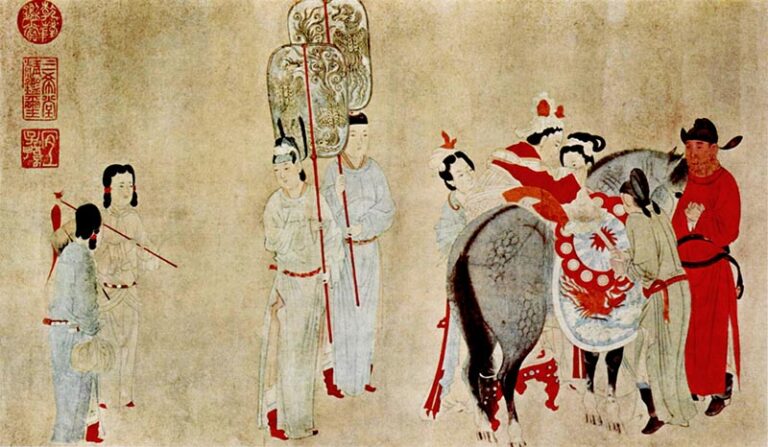
Already practiced at the Imperial Court since the Three Kingdoms period (220-280) Tui Na was introduced to the Imperial Medical University under the Tang Dynasty (607-944). Many techniques then enriched its applications for many disorders whose main beneficiary was the Emperor who was treated dressed while he worked.

1368 THE MING DYNASTY

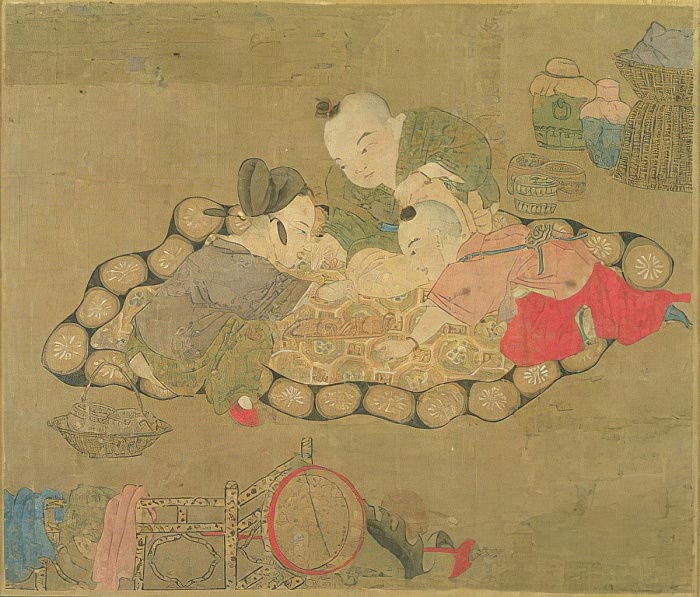
Une peinture asiatique

During the Ming dynasty (1368-1644) a pediatric Tui Na was particularly developed. Tui Na spread throughout China until the end of the Qing Dynasty (1644-1911). 
It is still practiced today.

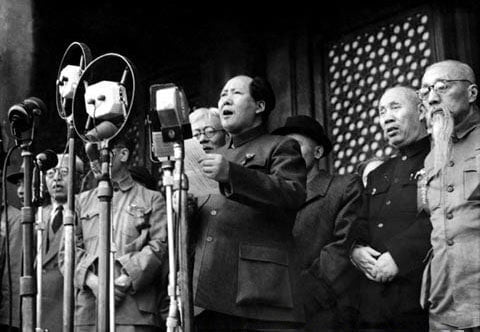
1949 THE POPULAR ENDORSEMENT OF CHINA

Une photo montrant la popularisation du Tui Na

In 1949, with the advent of the People’s Republic of China, Tui Na returned to the other disciplines of traditional Chinese medicine.

1950 FIRST TRAINING PROGRAMME

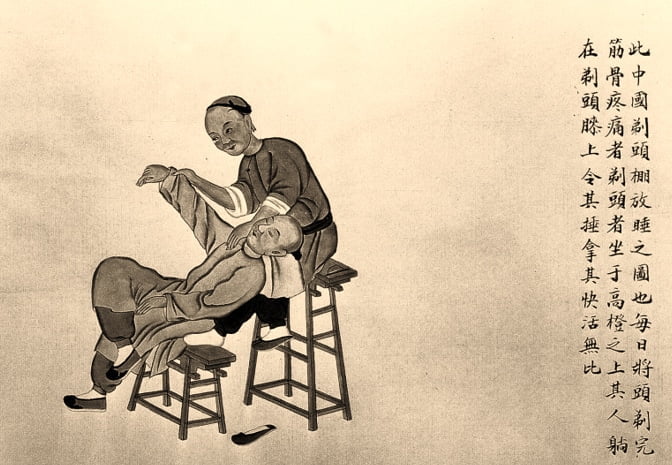
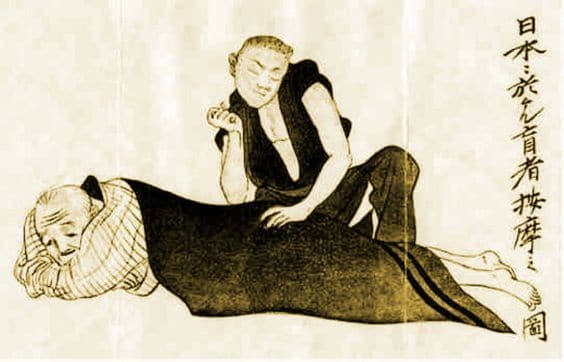
Une peinture d'un homme en massant un autre

In 1950, the first Tui Na training program was established. It lasted two years.

1974 TEACHING OF THE TUI NA

Une peinture asiatique sur laquelle un homme effectue un massage Tui Na

Since 1974, the teaching of Tui Na has been a separate but equal field of study in traditional Chinese medical universities. 
Tui Na’s doctors receive the same 5-year training as acupuncturists and herbalists, and enjoy the same level of professional respect.

Digito pressure works by stimulating acupuncture points to treat internal disorders or diseases

WHAT HAPPENS DURING A TUI NA SESSION?

The practitioner adapts to the specific needs of each person. 
Tui Na combines different gestures with different parts of the body, with more or less pressure.

the body parts 
the practitioner to “massage”

The actions employed
with + or – pressure

The body part
receiver

Finger, Thumb, Palm, Palm Base, Hand Slice, Wrist, Elbow…

Friction, Kneading,
Push, Grab,
Vibrations

Skull, Neck, Shoulders,
Upper or lower back
Members

A typical Tui Na session is practiced on a person dressed in comfortable clothes 
lying on a massage table or sitting.
The pressure can be strong, medium but also very soft.

Contre Indications for Tui Na

  • Poor health in general. 

  • Fever

  • Recent skin problems, dermatosis, wounds or scars.

  • Recent surgery

  • Inflammation of the joints,

  • Infectious disease,

  • Diseases related to bones and

  • skeletal.

  • Phlebitis,

  • Heart problems

your questions

Indeed there can be vigorous or strong massages that can be painful or uncomfortable during therapeutic massages in particular . This is sometimes necessary to tone a muscle or an energy point so the practitioner must be able to communicate and the recipient to whom it is recommended to tell his feelings.

I mostly use Tui Na at the end of the session to allow my client to evacuate superficial tensions, most often located in the neck, shoulders, upper or lower back and limbs.

Tui Na is normally practiced on the person dressed, through the garment, or by putting a fabric on the massaged part.

It is possible for some deep massages to use a cream or oil. If you have allergies, I recommend bringing your own products.

RDV Cabinet & Visio - Crenolibre.fr